
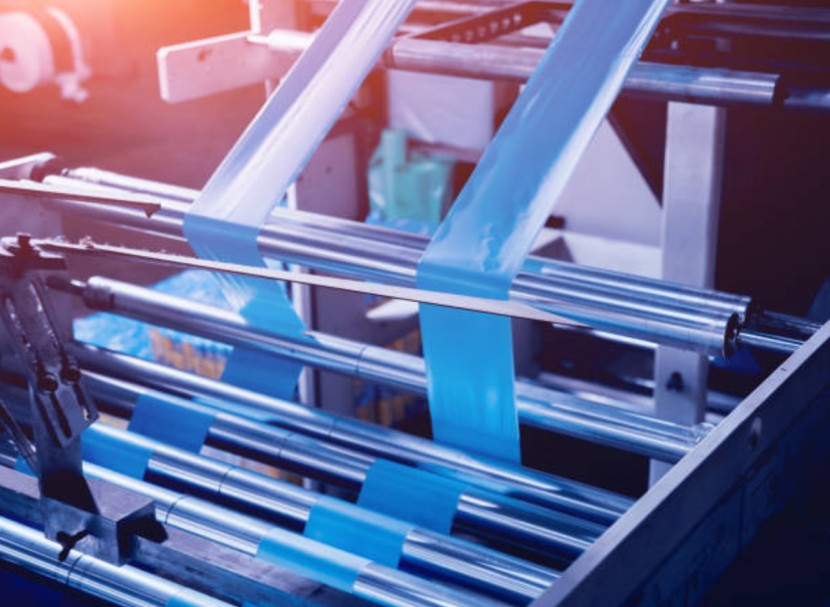
Excelling in the modern-day competing e packaging sector is determined by how fast and precise a company is. That is why, the entire production lifecycle down to the final distribution, for companies that manufacture plastic bags, must be optimized. B2B companies understand the importance of meeting client demands quickly and accurately. That is why they employ modern plastic bag manufacturing machines to help streamline processes, and improve quality while reducing costs. These machines, when leveraged with other equipment such as packing equipment, can help in boosting the production workflow.
Integration of design into other stages of production
The first step towards the fulfillment of a client order is the plastic bag design. A bag has to be planned so it can be used for something. Function, as well as aesthetics, needs to be taken into consideration. That is why integrating production planning with design eliminates errors and saves unnecessary waste.
Sophisticated software has made it easier for people in the design-stage to visualize how something will be made before the production step. A bag with a specialised manufacturing machine for bags will achieve savings in materials and sealing areas, optimization in areas of the production line such as print alignment and other designing parameters. Also, when designing integration with the packaging print machine is smooth, the placement of the printed components of a print design that includes a text, logo, or pattern has virtually zero chances of revision. More corrections are avoided, and this leads to quicker completion.
Improvements In Production Tasks Through Automation
Modern plastic manufacturing is being revolutionized through automation. Automated technology improves efficiency in monotonous tasks such as film feeding, cutting, sealing, and stacking. The positive sides of automation include:
- Increased Productivity: Machines are able to function continuously with minimal human intervention.
- Stable Quality and Performance: Control managed through automation results in consistent quality in dimensions and sealing of bags.
- Lower Operating Costs: Machines reduce the number of employees needed, freeing the labor assets to be put to use in other places.
B2B manufacturers can reach top quality with only bags and little additional materials using an integrated plastic manufacturing and cutting machine. Adding to the quality volume of produced bags is the automated feeding and cutting systems. Automated lines with integrated packaging printing machines ensure the printed designs are in time with the synchronized bag production cycle.
Improving The Overall Quality and Productivity of Printing
Improving the overall quality, as well as the productivity of printing, is an asset in the production of plastic bags. This Printing more specifically matters to the brands with great visuals, and, with, well-defined labels. Advanced packaging printing machines can be able to integrate with the production of the bags, providing unmatched alignment and consistent color quality.
Industrial productivity benefits gained from automated integration of the machines include:
- Less set-up time required: The handling of more of the film, especially direct handling results in delays, and more time consumed in the form of setup.
- Reduced material waste: Improved printing precision minimizes misprints and the scrap rate.
- Customized Orders: B2B clients can seamlessly order small batches with special designs with no interruptions to the main production line.
- Technological Advancement
Synchronizing the printing and bag production processes to their bagging can dramatically reduce the production costs while improving the quality of the products.
Reducing Energy And Adding Sustainability
Sustainability is quickly becoming a primary goal of plastic bag manufacturers. Modern plastic bag manufacturing lines focus on the use of servo driven motors and optimized heating systems to reduce energy usage and eliminate friction.
More sophisticated plastic bag manufacturing machines can now use biodegradable films, recycled plastics, and compostable materials. This has lowered the eco-friendly helmets and higher the interest supply to B2B clients with an eco-friendly stance. These machines coupled with energy-efficient packaging printing machines remain environmentally safe while increasing productivity.
The Intersection of Smart Manufacturing and Predictive Maintenance
Manufacturers have found that the impact of interrupted time on production efficiency is pretty severe. Predictive maintenance functionalities are being sought with increasing frequency. Smart systems have been integrated into plastic bag manufacturing machines equipped with sensors that monitor motors, temperature, and operational pressure. Escalation avoidance with maintenance done proactively is made possible through issue forecasting with real time data analysis.
Integration of the smart machines is done on more than a single unit. Centralized systems monitor multiple lines, packaging printing machines inclusive, and then distribute data on energy, speed, and maintenance. B2B businesses benefit through enhanced operational reliability, lower maintenance costs, and improved delivery times.
Fulfilling Orders with the Right Machines
Any B2B manufacturer that is interested in time and cost efficiency needs to select the right plastic bag manufacturing machine and packaging printing machine. The most important considerations are:
- Flexibility: Machines should be able to handle different sizes of plastic bags, various materials, and numerous print designs.
- Automation: The more autonomous the production line is, the less labor is needed. Productivity with lower dependency using less personnel is possible.
- Sustained assistance: Smooth functioning is guaranteed when the manufacturer is able to provide training and necessary assistance, technical spare parts, and operational support.
- Compliance and Safety: The machines should be within the industrial and environmental law compliance.Partnering with a trusted manufacturer ensures that the quality remains consistent, the turnaround time is quicker, and the overall cost is lower as well as the investment on production machinery.
In conclusion, integrating and synchronizing the manufacturing and printing processes is essential for the smooth production of plastic bags from the design phase to the delivery. Ingenious B2B manufacturers using robotic plastic bag manufacturing equipment and companion bagging and printing machinery can advance production flows, reduce errors, and enhance quality that scales to mass production.
When production automation, sustainability upgrades, as well as smart monitoring investments are made, the production lines stay agile, relevant, and capable of fulfilling a wide array of client requirements. With the proper understanding of these trends, right equipment is adopted, and a business can maximize the value of the equipment from design to delivery.