
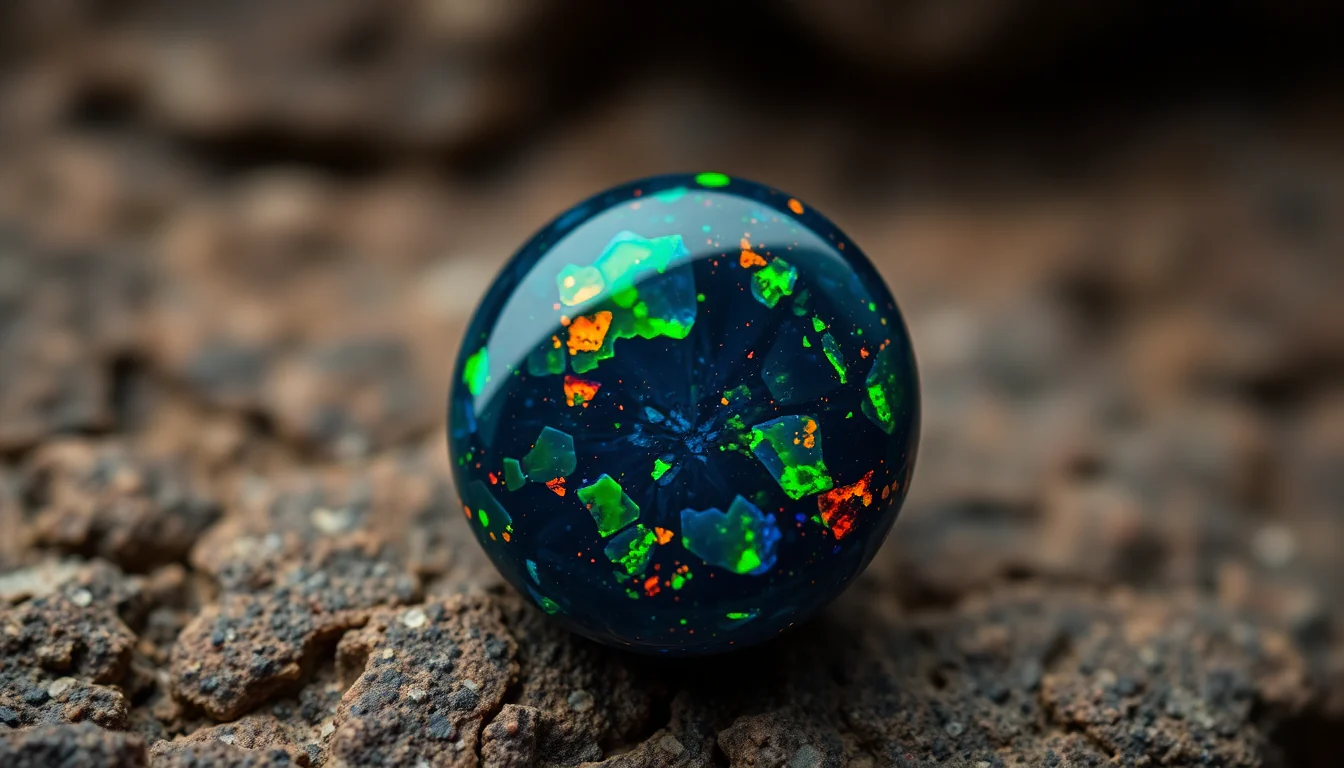
Gemstones have been cherished through the ages, not just for their rarity and value but also for their captivating beauty and the mysteries they hold within. In the world of precious stones, black opal stands out with a remarkable allure that captures the imagination of collectors and jewellery enthusiasts alike. This article delves into the fascinating journey of black opal, from its geological birth to its revered place in the world of gemstones.
The Genesis of Black Opal
The story of black opal begins millions of years ago, deep within the earth’s crust. Unlike many other gemstones formed from minerals, black opal is the result of a silicon dioxide solution that trickles into the deep crevasses and cavities within the earth. As the water evaporates, a silica deposit is left behind. Through eons, layer upon layer of this deposit solidifies and eventually forms precious opal.
The conditions required must be just right for the formation of black opal. It is this unique genesis that endows black opals with their incredible play of colours – a kaleidoscope of hues that change with the angle of light refraction.
Black Opal: A Spectrum of Wonder
What distinguishes black opal from other opal varieties is its dark body tone, which can range from dark grey to jet black. This dark backdrop is the perfect canvas for the vibrant colour play that these gemstones are known for. The rarity of the deep body colour combined with the brilliance of the colour play makes black opal especially sought after among collectors.
The phenomenon known as ‘play of colour’ is caused by the diffraction of light passing through the silica spheres within the opal. As light waves hit these spheres, they break up into spectral colours, giving the opal its distinctive fiery performance. The size and arrangement of these spheres determine the quality and pattern of the display.
Harvesting the Darkness: Black Opal Mining
The journey from opal’s geological inception to its final display in a jeweller’s window is arduous and thrilling. Black opals are predominantly found in Lightning Ridge, a small town in New South Wales, Australia, which is known as the black opal capital of the world. The mining process has evolved from pickaxes and shovels to advanced machinery, but it still requires a careful hand to extract these gems without damaging them.
Once extracted, the rough opal must be expertly handled and cut to reveal its inner beauty. Skilled artisans shape each opal, carefully bringing out the dynamic play of colour while considering the stone’s natural form and brilliance.
The Cultural and Symbolic Significance of Black Opal
Beyond its sheer beauty, black opal bears rich cultural and symbolic significance. Indigenous Australian lore holds that opals originated from the Creator, coming down to earth on a rainbow to bestow harmony. In antiquity, these gems were prized by royalty and believed to bring good fortune and protection to their wearers.
Through the centuries, black opal’s enigma has inspired myths and legends, with many cultures attributing mystical properties to these stones. Today, they continue to be treasured for their perceived powers to amplify emotions, encourage freedom and creativity, and as talismans for those seeking protection.
The Value of Black Opal
Determining the value of black opal is as complex as the gemstone itself. Several factors play into an opal’s worth—such as brightness, colour (including the variety and distribution of colour), pattern, shape, and transparency. Due to its rarity and unparalleled allure, black opal often fetches high prices in the gem market, with the finest stones considered to be among the most valuable gemstones in the world.
True connoisseurs appreciate the uniqueness of each black opal. No two stones are the same, which means that each piece of black opal jewellery is a one-of-a-kind treasure, a snapshot of the fantastic interplay between earth and element that created it.
Black Opal in Modern Design
The splendour of black opal is not confined to collectors’ cabinets or historic artefacts. Contemporary jewellers are captivated by black opal’s properties, incorporating these mesmerising stones into modern designs. Whether set in rings, necklaces, earrings, or brooches, black opals are versatile showstoppers that catch the light and the eye in equal measure.
The demand for unique and ethical gemstones has also seen black opal rise in popularity. Conscious consumers are drawn to not only the beauty of black opal but also to the stories behind them—the heritage and the expertise involved in their journey from the earth to the showcase.
Preserving the Legacy of Black Opal
As with any finite and precious resource, the sustainability and ethical mining of black opal are ongoing considerations. Regulations and efforts are in place to ensure that the mining of black opal is conducted responsibly, both environmentally and societally. Moreover, advancements in mining technology continue to minimise disruption to the natural landscape while increasing safety for miners.
For aficionados and future generations, safeguarding the tradition and environment of black opal mining is vital. It helps preserve the unique heritage and ensures that the love for black opal carries on, from antiquity into the modern age.
Conclusion: The Eternal Allure of Black Opal
Unveiling the allure of black opal reveals a journey as magnificent as the stone itself. From the darkness of its underground origins to the spotlight of the jeweller’s display, black opal continues to fascinate and capture hearts across the globe.
The gemstone’s journey from the ancient to the present-day speaks volumes about the timeless beauty and enduring legacy of black opal—a true natural wonder that transcends cultures, ignites imaginations, and symbolises the enduring quest for that which is rare and beautiful.
In a world that relentlessly seeks the unique and the remarkable, black opal remains a symbol of nature’s artistry, standing out as a testament to the fact that the most extraordinary treasures often come from the most unexpected places.