
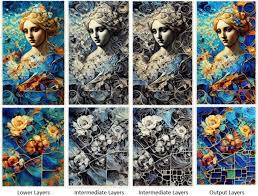
Artistic expression has found a powerful new medium in the form of neural style transfer. The purpose of these AI Photo Editors is to decouple the “content” of an image from its “style,” allowing users to merge the two in creative ways. For example, a user can take a simple photo of a city street and apply the brushwork, color palette, and texture of Van Gogh’s “Starry Night.” This technology doesn’t just apply a simple overlay; it reinterprets the original photo’s geometry through the lens of a specific artistic aesthetic, creating a unique piece of digital art that maintains the recognizability of the source.
The target audience for style transfer tools includes digital artists, social media creators, and graphic designers seeking unique visual assets. In an environment where social media feeds are saturated with standard photography, these artistic transformations provide a way to stand out and capture attention. Educational institutions also use these tools to teach students about art history and the specific techniques of various movements by allowing them to apply those styles to their own creative work. It is a tool for both professional experimentation and casual creative play.
The benefits of AI style transfer are centered on creative expansion and rapid prototyping. For a designer, it allows for the quick generation of “vibe” boards or stylistic variations for a brand campaign. It encourages experimentation by removing the technical requirement of mastering dozens of different painting or illustration styles manually. Furthermore, these tools can be used to create consistent visual themes for a series of images, ensuring that a website or social feed has a cohesive “hand-painted” or “modernist” feel. This level of sophisticated art synthesis was once the domain of high-end researchers but is now available to anyone with a browser.
In terms of usage, these tools usually provide a library of pre-set “master” styles to choose from, or they allow users to upload their own “style reference” image. Once the content and style images are selected, the AI runs an optimization process that blends the two. Users can often adjust the “style strength” to find the perfect balance between the original photo and the artistic interpretation. Some platforms even offer “real-time style transfer” for video content, which is a major innovation for motion designers and filmmakers. To stay updated on the most powerful Best AI Tools for digital art creation, following curated industry lists is essential for modern creatives.