
Nobody wants property damage. Dealing with damage to your home is stressful enough.
But did you know your insurance company will throw complex legal terms at you when you file a claim?
Insurance companies love using confusing legal jargon like this.=
And most homeowners don’t know these terms. Which makes property damage claim denial a likely result.
Don’t be that homeowner.
After reading this guide, you’ll have a good grasp on some of the most important legal terms.
Knowledge is power when dealing with insurance companies.
You’ll learn:
- Insurance Terms To Know Before Filing A Claim
- Common Reasons Claims Are Denied
- Most Important Areas of Your Policy to Review
- When to Contact a Lawyer
Legal Terms Homeowners Should Know Before Filing a Claim
Here’s a fun fact.
Insurance Policies are written by lawyers.
Yep. They don’t write them so the average person can understand them on purpose.
According to Weiss Ratings, the nation’s 13 largest homeowners insurers denied 47.5% of closed claims last year.
That means almost HALF of ALL homeowners insurance claims DID NOT RESULT IN ANY PAYMENT.
That is crazily scary if you ask me.
But…
The good news is the majority of those claims could’ve been avoided if the homeowner knew their policy language BEFORE filing a claim.
Don’t get caught up in legal jargon. A property damage attorney will know how to fight back against your property damage claim denial.
Read on to learn the top legal terms you should know BEFORE disaster strikes.
Covered Perils vs. Exclusions
This should be the first place homeowners look when filing a claim.
Your policy spells out:
- What covered perils will pay for damage (covered perils)
- What perils will not pay for damage (exclusions)
Typically standard homeowners policies cover things like fire, lightning, wind damage, theft and more. If one of these perils caused damage to your home, the insurer is REQUIRED to pay on your claim.
Exclusions are the exact opposite. These are specific perils listed in the policy that will not be covered.
Some examples are:
- Flood
- Earthquake
- Wear and tear
- mold
- Damage from lack of maintenance
Here’s something most people don’t know…
Policy exclusions account for roughly 33% of claim denials.
Reviewing this section of your policy BEFORE something happens can save you a lot of headaches later.
Actual Cash Value vs. Replacement Cost
This legal jargon impacts how much money YOU will actually receive from a homeowners insurance claim.
Actual Cash Value takes depreciation into account. It pays how much the damaged item is worth at time of loss.
Replacement Cost Value pays the full cost to replace a damaged item. There are no depreciation deductions.
Understanding how much you’re going to receive BEFORE filing is important.
The difference between ACV and RCV could be thousands of dollars.
Deductibles and Policy Limits
If you have ever talked to an insurance agent about your homeowners policy, you’ve likely heard these terms before.
They are extremely important to understand before filing any type of claim with your insurer.
Deductible: Amount of money you pay before insurance coverage kicks in.
Example: Let’s say damage to your home is $3,000 to repair. If you have a $1,000 deductible, your insurance company will only pay $2,000 of that claim.
Some insurers also have a percentage deductible that applies to certain perils. A percentage deductible may only apply to hurricane or wind related damage.
Example: If you have a 2% deductible on a home worth $300,000, you are responsible for the first $6,000 of covered loss.
Policy Limits refer to the maximum amount an insurer will provide for a covered loss.
Example: If you have a $200,000 policy limit and suffer $250,000 in damages, you’re $50,000 is not covered.
Both of these terms should be known by homeowners before filing a claim with their insurance company.
Proof of Loss and Documentation Requirements
If you don’t provide your insurance company with what they need, they sure as heck aren’t going to pay a claim.
A proof of loss is a legal document that is REQUIRED by most insurers to file after a loss.
It’s a sworn statement that explains:
- What was damaged
- How much the damaged items are worth
- How the damage occurred
Deadlines exist for filing this paperwork and if your paperwork is missing items, you can kiss that insurance check goodbye.
Make sure YOU provide your insurer with…
- Photos/Videos of all damage
- Receipts of damaged items (if available)
- Contractor Estimates
- Written description of loss
- Date/Time loss occurred records
Don’t wait for your insurance company to request this information. Compile it as soon as possible.
Duty To Mitigate
Another term that trips homeowners up.
Your homeowner’s insurance policy includes a duty to mitigate.
Essentially what this means is that after a loss occurs, YOU have to attempt to prevent any further damage to your property.
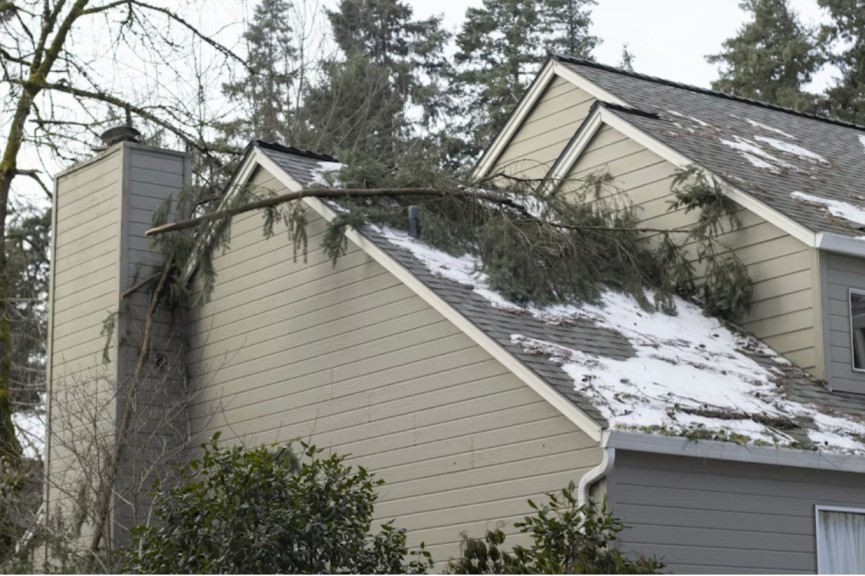
If the insurer refuses to pay because you left the roof uncovered during a rainstorm AFTER a tree fell through it, they could deny your entire claim because you didn’t mitigate further damages.
Examples of mitigation include…
- Boarding up broken windows with plywood/tarps
- Turning water off to your home if pipes burst
- Moving undamaged belongings out of damaged areas
Keep all receipts for emergency repairs. Those costs are usually covered by your insurer.
Bad Faith
Want to know why insurance companies get a bad rap?
Bad faith occurs when your insurance company doesn’t treat you fairly.
Examples of bad faith include:
- Unreasonably denying a valid insurance claim
- Unnecessarily delaying claim investigation or payment
- Failing to conduct a proper investigation of damages
- Failure to provide specific reasons for denying a claim
- Misrepresenting language in the insurance policy
Homeowners have rights when dealing with their insurance company.
If you believe your insurer is guilty of bad faith, consult with a property damage lawyer.
Subrogation Rights
Ok, so this one sounds super technical.
It’s not.
Subrogation rights mean that if your insurer pays for damage to your home, they can then try and recover costs from the party at fault.
Example: Joe’s tree falls on Brandon’s home. Brandon files a claim with his insurance company. They pay his claim. THEN they try to recover costs from Joe’s insurance company.
Homeowners should understand that by signing their insurance policy they agree to cooperate with subrogation efforts.
If a homeowner refuses to help their insurance company collect, they could be jeopardizing their own claim.
Bottom Line
Property damage insurance claim denials are never the end of the road.
Knowing what you’re dealing with BEFORE disaster strikes is half the battle.
Remember:
- Review policy language for covered perils and excluded perils.
- Know if you have ACV or RCV coverage.
- Document, document, document.
- Mitigate further damage.
- Don’t let your insurance company treat you unfairly.
Insurance policies are intentionally confusing to the everyday man.
Equipping yourself with knowledge and having a property damage lawyer on speed dial will help you fight back against unfair claim practices.